Home › What we buy › Old American coins
Selling old U.S. coins in Jacksonville
Blue folders, albums, rolls and jars of change. We separate the silver, grade the coins that deserve it and tell you clearly what is common.
Collections that came south
Plenty of the collections we see in Jacksonville started somewhere else. A father in Pennsylvania filled folders from his paycheck change. A mother in New York ordered a proof set every year. When the family retired to Mandarin or the beaches, the coins came along in a moving box.
We also see collections built right here, by Navy families, shipyard workers and longtime Jacksonville residents who saved the silver when it left circulation in the 1960s.
What a jar of old change usually holds
When a jar or a coffee can gets poured out on our table, it usually tells the same story. Mostly copper cents from the 1950s and later. Some nickels. A handful of silver dimes and quarters. Maybe a few Kennedy halves and one or two coins no one in the family can identify.
Silver gets separated first, then the older copper and nickel. We look through each group for dates collectors want, price the silver by weight and count the rest.
Dates worth a closer look
None of these is a sure thing, but each gets a careful look every time.
- Indian Head cents from 1877, 1908-S and 1909-S
- Buffalo nickels from 1913-S, 1921-S and 1937-D three-legged
- Mercury dimes from 1916-D, 1921 and 1921-D
- Standing Liberty quarters with full dates
- Walking Liberty halves from the 1910s and early 1920s
- Franklin halves with full bell lines
Finding the mint mark
A mint mark is a tiny letter showing where a coin was made: D for Denver, S for San Francisco, O for New Orleans and CC for Carson City. Philadelphia coins usually have none. On wheat cents, look just below the date. On Mercury dimes, look on the back near the bottom. On Walking Liberty halves, look on the back near the rim, lower left.
You do not need to check them yourself. We go through every one.
Proof and mint sets
Families in Northeast Florida bought a lot of sets from the Mint over the years. Anything from 1964 or before holds 90 percent silver coins, as do the silver proof sets made since 1992. Clad sets from 1968 through 1991 usually sell near face value. Keep them in their original packaging.
Humidity and old coins
Florida air is hard on coins. Copper turns dark or green, and cardboard folders can grow mildew. Do not try to clean any of it. Move the coins to a dry, air-conditioned room, leave them in their holders and bring them as they are. We price coins on their real condition, and cleaning only makes that worse.
Coins from Jacksonville's past
Jacksonville grew fast after the Great Fire of 1901, rebuilding downtown in brick and spreading into Riverside, Springfield and San Marco. A century of shipyard work, railroad jobs and Navy paychecks followed. Families who lived through those years saved in coin, and their grandchildren still find Barber dimes, Liberty nickels and silver dollars in drawers and tins.
Older coins like those need a careful look. Many are worn smooth from decades of use, but some dates carry real premiums even in worn condition. We go through each one and price it on its own merits.
What we look for
- Indian Head and wheat cents
- Buffalo nickels and silver war nickels
- Mercury and Roosevelt dimes through 1964
- Washington and Standing Liberty quarters through 1964
- Walking Liberty, Franklin and Kennedy halves
- Proof sets and mint sets
- Graded coins in sealed holders
How old coins are priced
Silver dimes, quarters and halves from 1964 and before are 90 percent silver, so they never sell for less than their silver. Copper and nickel coins start at face value and climb only when the date or condition is special.
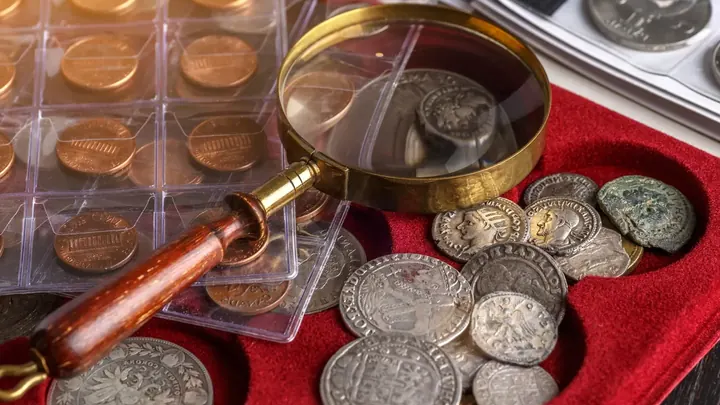
We look at every candidate coin under magnification. The better ones get their own line on the offer, and the rest are grouped by type.
Further reading: How to tell if gold is real
Questions families ask
Are wheat pennies worth anything?
Most bring a few cents each. A small number of dates, like the 1909-S VDB, 1914-D and 1931-S, bring far more, and we check every one.
Do you buy coins in albums?
Yes. Leave them in the album and we will examine each coin where it sits.
Should I polish dark coins?
No. Polishing removes the original surface and lowers the value.
Request a free appraisal
We call back the same day to find a time that works.