Most foreign coins brought home from deployments are modern base metal change worth very little. The ones worth money are older silver coins, almost any gold coin and a small number of scarce dates. Sorting by metal first tells you quickly where the value is.
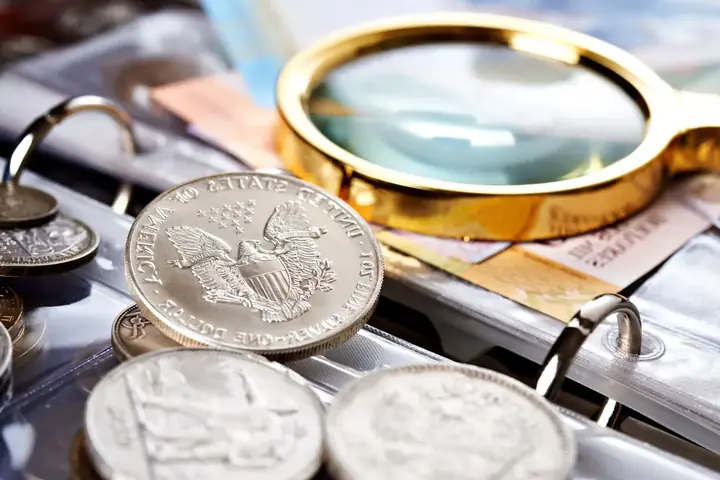
Why most are worth little
Nearly every country stopped putting silver in everyday coins during the 1960s and 1970s. Coins from after that are usually copper, nickel, brass or aluminum, and there are billions of them. Even if they cannot be spent here, collectors rarely pay much for them.
What to look for
A few kinds of coins in a military bag are worth pulling out.
- British coins dated 1946 or earlier, which contain silver
- Canadian dimes, quarters and dollars dated 1967 or earlier
- Mexican pesos and commemoratives from the 1950s and 1960s
- Spanish, Italian and French silver coins from the 1950s
- Japanese silver yen from before World War II
- Any gold coin, from any country
Challenge coins and medals
Military challenge coins are usually brass, bronze or zinc alloy and carry little metal value, though some collectors trade them. Service medals have collector value of their own, but usually not as metal. We will tell you if any piece is silver or worth more to a specialist.
Foreign paper money
Modern foreign banknotes are only worth their exchange value at a bank, which we cannot pay. Older notes and notes from countries that no longer exist can have collector value, and we can look at them.
A few more answers
Will a bank exchange old foreign coins?
Most banks do not take foreign coins at all, only some notes.
Should I separate the coins by country?
No need. We sort the whole lot with you at the appointment.
When you are ready: World coins